
3rd October 2025
Our bodies are full of intricate molecules that carry out important functions. How can we be smart about making more of these molecules to promote health and regenerative medicine?
A new review involving researchers at CÚRAM, the Research Ireland Centre for Medical Devices, explores how tweaking naturally occurring molecules called Glycosaminoglycans or GAGs could hold the key to better wound healing, joint health and even cancer treatments.
The review, called ‘Exploring the Extracellular Matrix: Engineering Native Glycosaminoglycans to Modulate Host Responses’ has just been published in the journal Cell Biomaterials, and details how engineered GAGs can surpass the functions of their native counterparts.
Youthful molecules
If you are interested in moisturisers, you have probably heard of hyaluronic acid, a water-grabbing molecule that can boost the appearance of skin. Or, if you have looked into improving joint health, you probably know about chondroitin sulfate, a building block of the cartilage tissue that helps to cushion joints and keep them working comfortably.
Both hyaluronic acid and chondroitin sulfate are examples of GAGs. These long, negatively-charged molecules are found naturally around the cells in our bodies, in an environment called the extracellular matrix or ECM.
“The ECM contains many types of glycosaminoglycans or GAGs that perform specific functions, including lubrication in joints and cell growth, adhesion, and movement,” explains lead author Professor Abhay Pandit, Established Professor in Biomaterials at the University of Galway and Founding Director of CÚRAM.
“Many of these GAGs are of interest in regenerative medicine, which looks to harness the body’s own resources for healing and for preventing further injury. For example, at CÚRAM we are using GAGs to make hydrogels that can be introduced to wounds following surgery, or incorporated into wound dressings on the skin, so they can promote faster healing.”
Overcoming limitations for the clinic
However, GAGs are not always amenable to being used as therapeutic molecules in the clinic – for example, if they are injected into the body, they may be quickly broken down and eliminated.
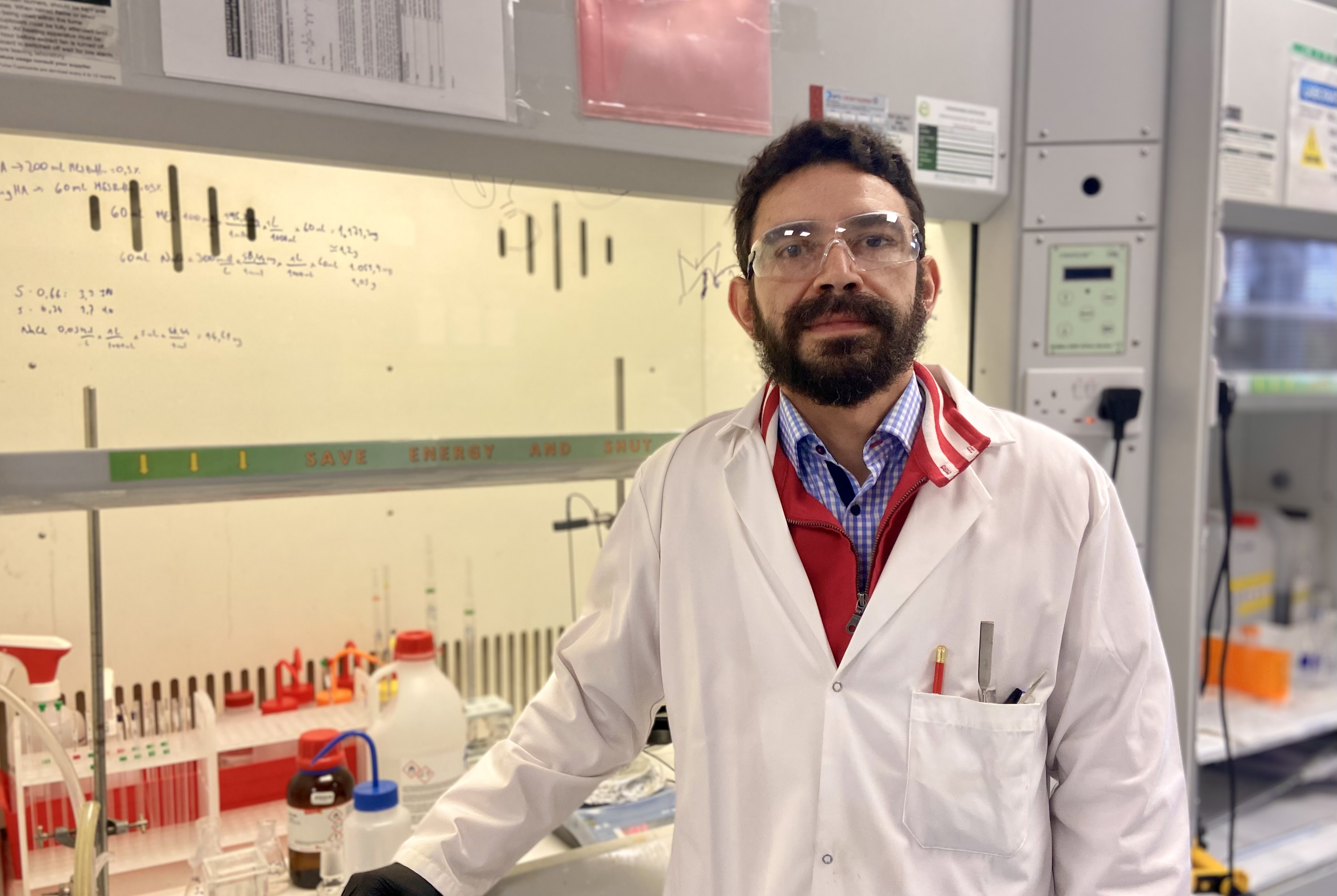
This is where chemical engineering can help, notes review co-author Dr Juan Uribe-Gomez, a chemist and a post-doctoral researcher at CÚRAM, at the University of Galway.
“It’s possible to use various methods to make and modify GAGs, to tailor them for specific biological roles,” he says. “These approaches include oxidation, adding sulfate groups, esterification and amidation – each of which can enhance a specific function, or overcome a known limitation.”
Tweaking these naturally occurring molecules offers new tools for many important areas in medicine, the review outlines, including optimising hydrogels for delivering and supporting drugs in the body, says Professor Pandit.
“Engineered GAGs can incorporate various bio-functional elements that help to deliver drugs into the body and promote a microenvironment for the drugs to help heal injury or promote growth or encourage immune cells to attack cancer,” he explains.
“In this way, we see engineered GAGs as being crucial for the future of tissue engineering and cell-based therapeutic approaches.”
You can read the review, authored by researchers from the University of Galway and the University of Milano-Bicocca, here.
ENDS
