
March 23rd 2026:
CÚRAM Researchers at University College Dublin have developed a groundbreaking robotic model of the human oesophagus, transforming how swallowing disorders are studied, diagnosed and treated.
Dysphagia, or difficulty swallowing, affects around 20% of the global population, and up to 50% of people over 60.
Until now, research has relied on limited models that cannot replicate the majority of swallowing disorders, hindering both understanding of the condition and the development of effective treatments.
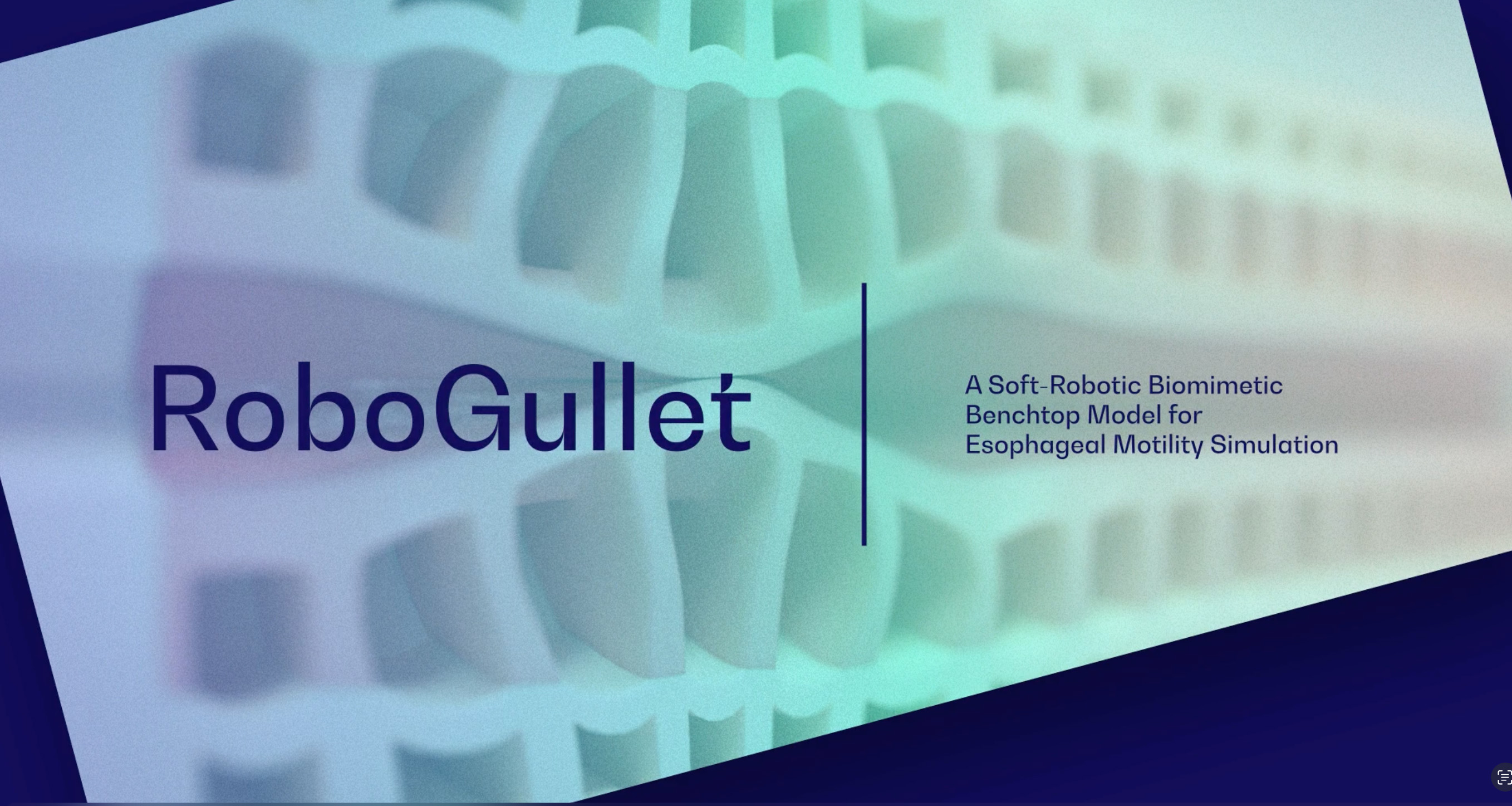
But new research, published in Nature Communications, from CÚRAM, the Research Ireland Centre for Medical Devices, based at UCD, in collaboration with Massachusetts Institute of Technology and Harvard Medical School, have developed ‘RoboGullet’ – the first system capable of realistically replicating the complex mechanics of human swallowing.
“Highly accurate benchtop models exist for other parts of the body, such as the heart. However, we have never had a model that accurately mimics both the key physical and functional properties in the esophagus or gastrointestinal tract,” explains UCD PhD candidate Seán Kilroy, lead author on the study.
“Our research has shown that RoboGullet addresses this gap by more accurately simulating how the muscles of the esophagus move in both healthy and diseased states.”
Swallowing relies on the coordinated action of two distinct muscle layers in the oesophagus.
Previous laboratory models have been unable to reproduce this interplay, limiting research into motility disorders such as achalasia.
RoboGullet overcomes this by using soft robotics to independently simulate both muscle groups, enabling realistic replication of normal swallowing as well as disease-related dysfunction.
The study demonstrates the device’s potential across a range of clinically relevant applications, including testing oesophageal stents, commonly used in cancer patients, and analysing how different food consistencies affect swallowing and diagnosis.
A biohybrid version of the model, incorporating real tissue, further enhances realism by replicating the frictional properties of the human oesophagus.
“The device has demonstrated its versatility as a clinical tool and can simulate a variety of diseases or disorders of the esophagus. Not only does it replace inappropriate pre-clinical models, but it can also help us understand what influences stent migration in this area, and even how well different patients can manage different diets,” said co-senior author Dr. Giovanni Traverso, Department of Mechanical Engineering at MIT and gastroenterologist at Harvard Medical School.
Co-senior author Dr. Eoin O’Cearbhaill, from UCD School of Mechanical & Materials Engineering, added RoboGullet had proven itself “a powerful translational tool, advancing our understanding of esophageal motility and its therapeutic interventions”.
“The model can be used to simulate a multitude of conditions relevant to disease management and personalized clinical testing and we look forward to seeing its use by researchers to impact patient care.”
By providing a controllable, repeatable and highly realistic platform, RoboGullet bridges the long-standing gap between laboratory models and clinical studies.
Researchers say it could accelerate the development of new treatments and devices, support more accurate diagnosis, and enable evidence-based dietary guidance for patients with swallowing disorders.
– Ends –
