
March 16th, 2026:
Deep Brain Stimulation (DBS) involves the implantation of electrodes into specific areas of the brain to deliver electricity from an implanted battery source. DBS is used to treat a variety of neurological conditions, including Parkinsons Disease. One of the major difficulties associated with the insertion of electrodes in the brain is the scarring and inflammation, known as gliosis.
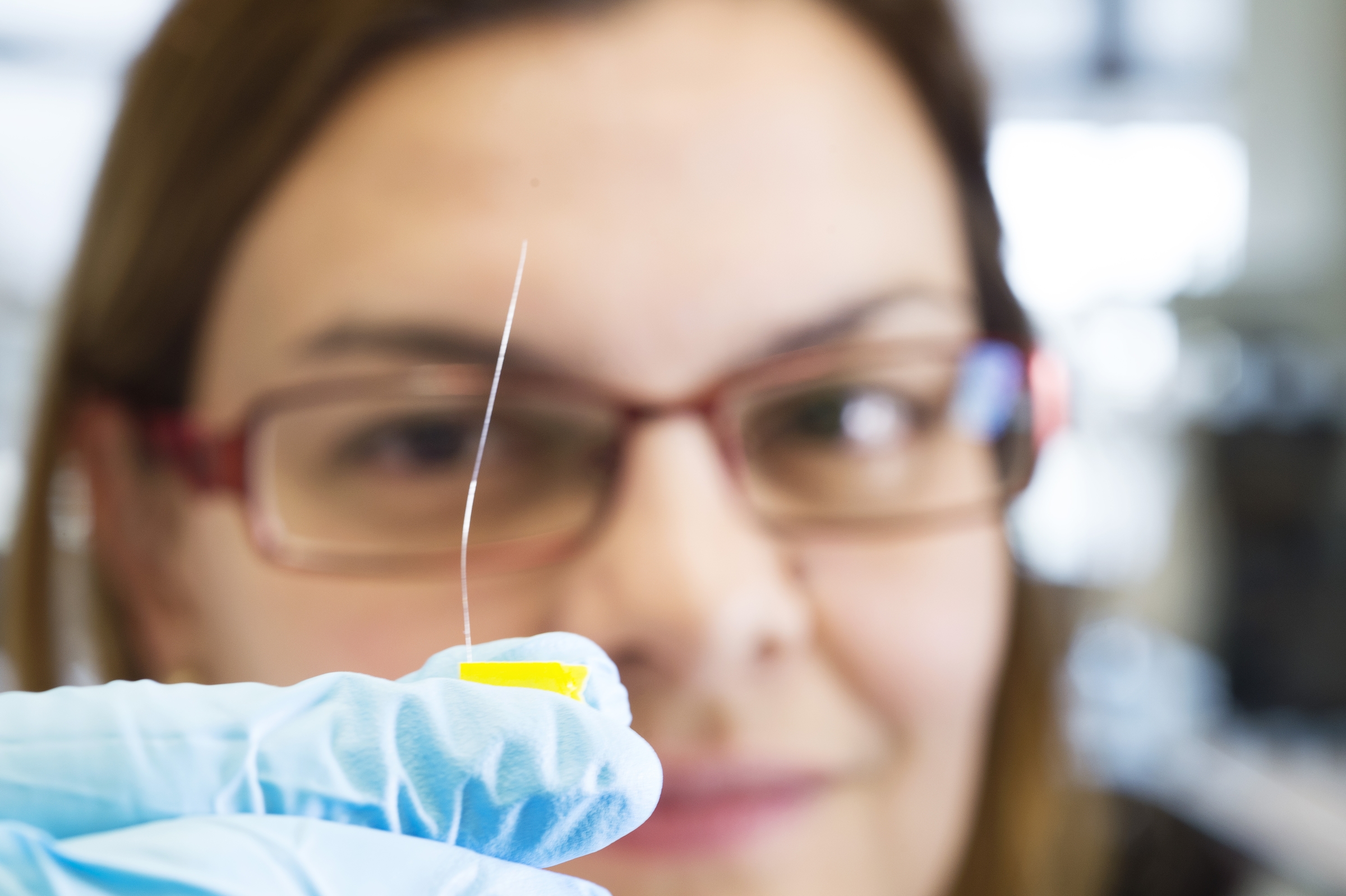
Dr Catalina Vallejo-Giraldo, Investigator at CÚRAM, Research Ireland Centre for Medical Devices at University of Galway, together with an international team of collaborators have just published research in the journal Cell Biomaterials, that shows how a fabricated molecule known as F6 can be used to coat electrodes safely, to reduce both the scarring and inflammation response in the brain which affects the long term performance of implanted neural electrodes.
“Heparan Sulphate is found on the surface of our cells and plays an important in cell signalling, growth and adhesion. F6 is a heparan sulphate mimetic, which means it acts exactly the same way as heparan sulphate does in the body.” Explains Dr Vallejo-Giraldo. “By coating the electrodes with F6, it disguises the electrode as a foreign body in the brain, which means the response to the foreign body is reduced, allowing the electrode to perform its jobs more efficiently and for longer.”
The collaboration, involving researchers from University of Galway, the Silesian University of Technology, Gliwice, Poland, the Laboratory for Cell Growth and Tissue Repair in France, the School of Electrical and Electronic Engineering at University College Dublin and the Department of Chemistry at University of Leeds was a genuinely multidisciplinary effort. The collaboration brought together expertise spanning glycan mimetics, biomaterials science, molecular dynamics and neuroengineering, which was fundamental to the success of the project.
“We are really proud of the comprehensive nature of the study, starting with lab based testing to preclinical validation” said Dr Vallejo-Giraldo. “One of the first steps was identifying the potential of F6 as a mimetic that had a really important role in reducing inflammation. F6 is already being tested in clinical trials as a potential therapy, but this is the first time that it has been used to functionalise an electrode in this way. “
Dr Manus Biggs, senior author on the paper said “This research opens new avenues for the use of mimetics in neural engineering. By integrating these type of materials into the design of medical devices we can improve their long term performance, benefitting patients through more reliable and durable technologies.
The full paper can be accessed here.
Ends
