
New three-year initiative will bring 30 PhD researchers from India’s leading institutes to Rinn Medical Devices’ laboratories.
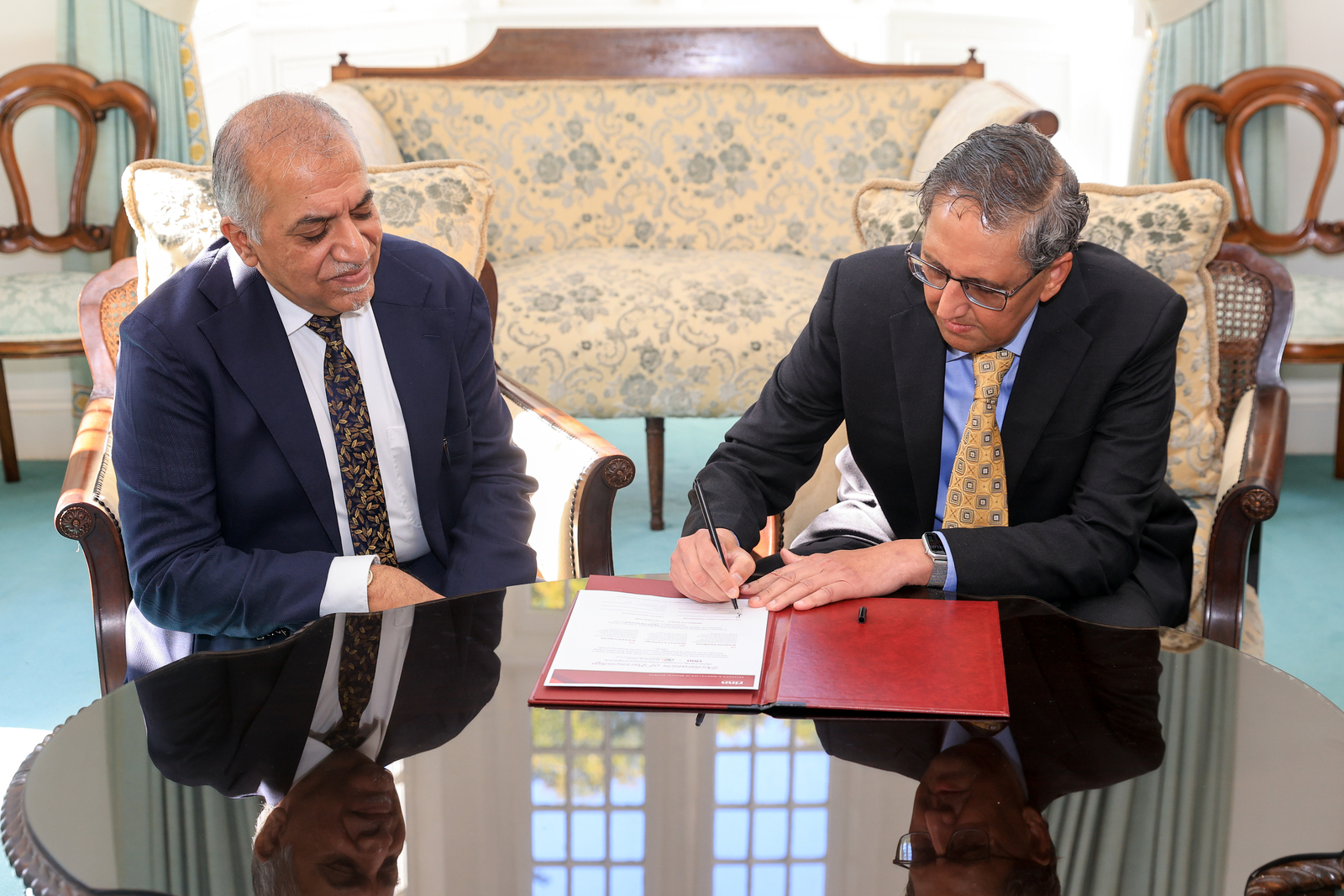
Monday September 21st, 2026: Rinn Medical Devices, part of the Rinn Network funded through Research Ireland has formally launched the Mehta-Rinn Ireland-India Scholars Programme at University of Galway.
The three-year programme will bring postgraduate researchers from India’s premier institutes to Rinn Medical Devices’ laboratories across Ireland for immersive, supervised research placements. Each year, 10 scholars will be selected, with a total of 30 scholars to be hosted over the lifetime of the programme.
Scholars will work alongside Rinn Medical Devices principal investigators across core research themes, including research in cardiovascular devices, neurology, and smart and responsive biomaterials. This will also give the scholars access to state-of-the-art biomaterials fabrication, device characterisation and clinical translation facilities. The programme is designed to deliver lasting benefits for scholars, their home institutions and Rinn Medical Devices alike. It builds life-long ties by exposing early-career researchers to European research culture and regulatory frameworks, forging formal research relationships between Irish and Indian faculty, and developing a pipeline of talent for future postdoctoral and industry engagement in Ireland and across Europe.
The initiative was announced at a special event with the Mehta Foundation at the University of Galway campus. It forms a central part of Rinn Medical Devices’ international research strategy, which identifies India as one of its priority partner regions. Given the complementary strengths of Indian engineering institutions in medical devices and supporting technology this will grow the depth and reach of Rinn Medical Devices. Alongside the scholar’s programme, Rinn Medical Devices will pursue joint research projects and co-authored publications with Indian partner institutions and will coordinate with Research Ireland and Enterprise Ireland to support the broader Ireland–India research relationship.
The launch event was attended by Professor David Burn President of University of Galway, Professor Abhay Pandit Director of Rinn Medical Devices and Rahul Mehta of the Mehta Family Foundation.
Professor David Burn, President of the University of Galway said, “The University of Galway is proud to host this landmark partnership. Welcoming outstanding PhD researchers from India’s leading institutes strengthens our international standing and our shared ambition to advance medical device research that improves lives. I want to thank the Mehta Family Foundation for their generosity and vision. “
Noting the key support of the Mehta Family Foundation and its founder Rahul Mehta, Professor Pandit remarked, “With this new organization structure and the support of Research Ireland, we see the future increasing the impact of Ireland’s research. That future must extend to new partners. India, which has both the talent and the needs, can join us in creating the future medtech the world needs. This programme reflects this strategic commitment to building enduring international research partnerships at Rinn Medical Devices. Hosting scholars from India’s finest technical institutes will bring fresh ideas into our laboratories, while giving our own researchers and students a genuine window into one of the world’s fastest-growing research ecosystems. We are deeply grateful to the Mehta Family Foundation for making this possible.”
The Mehta Family Foundation is dedicated to advancing India’s higher education through long-term partnerships between world class India institutions and other international leading universities and research center. In addition, the Mehta Family Foundation has inculcated these ideas by establishing new fields of study in leading Indian public institutions. This includes schools and centers in across six IITs- Madras, Kanpur, Guwahati, Roorkee, Palakkad, and Indore. Each one brings a new base of knowledge including biotechnology, artificial intelligence, sustainability, and health sciences.
As Rahul Mehta noted at the event, “Ireland’s medical device industry has become one of the most advanced in the world, and this programme gives Indian scholars a front-row seat to it. We have always believed talent flourishes when it is given the right environment and the right mentors. This programme is our way of building that bridge between India and Ireland for the scholars of tomorrow. This partnership would not be possible without the leadership of Professor Abhay Pandit. His vision and efforts to expand the reach of Rinn Medical devices was key in making this program a reality.”
H.E. Mr Manish Gupta, Ambassador of India to Ireland pointed out that, “India and Ireland share a long history of academic and cultural exchange, and this programme complements the relationship. By embedding our IT scholars within a research centre of this calibre, we are unlocking new pathways for collaboration in advancing science and technology between our two countries”.
The first scholars on the Mehta-Rinn Ireland-India Scholars Programme are due to commence research in University of Galway in 2027. Applications will be open to students currently enrolled in biomedical programmes at recognised Indian higher education institutions, as well as outstanding candidates from life sciences or physical sciences backgrounds with clear relevance to medical device research. Further details on the application and selection process will be announced in the coming months.
###
Notes to Editors
About the “Mehta-Rinn Ireland-India Scholars Programme”
The programme will run for three years, admitting an annual cohort of ten scholars for a total of thirty over its lifetime. All scholars will be placed in Rinn Medical Devices research laboratories matched to their research interests, on the recommendation of a Selection Committee.
About Rinn Medical Devices
Rinn Medical Devices is part of the Rinn Network funded through Research Ireland. Established in 2026, is focused on supporting healthy ageing by developing medical device innovations that tackle the chronic conditions most likely to affect people as they age, from heart and kidney disease to neurological conditions, cancer, and beyond. Building on the outputs of CÚRAM, the Research Ireland Centre for Medical Devices (2015–2026), our work is guided by three core research areas, or clinical pillars: Cardiovascular-Renal-Metabolic health, Neurological health, and Cancer and Inflammatory conditions, reflecting health challenges that matter most to older individuals and the people who care for them. To translate research into real devices that reach patients, these pillars are supported by three cutting-edge technology themes: host responsive devices, detection systems and the technology drivers that make it all possible. Our translational research programme brings together a wide range of experts, clinicians, regulators, statisticians, and financial and market specialists; to rigorously assess how early-stage discoveries can transition from the laboratory to clinical use. At every step, patient voices, experiences, and priorities shape what we do and how we do it, ensuring that the devices we develop are not just scientifically sound, but genuinely meaningful to the people they’re designed to help.
About the Mehta Family Foundation:
The Mehta Family Foundation supports education and research initiatives that build long-term ties between India and leading international institutions. It has established schools and centres in new and frontier areas of study and research, supporting the creation of eight academic schools and centres across six Indian Institutes of Technology, located at Madras, Kanpur, Guwahati, Roorkee, Palakkad, and Indore. Each one brings a new base of knowledge, including biotechnology, artificial intelligence, sustainability, and health sciences. These schools have created the capacity for 3,000 students and are projected to graduate more than 10,000 by 2030. The Mehta Family Foundation has also supported the development of 620,000 sq. ft. of infrastructure enabling research, innovation, and interdisciplinary learning at scale.
